
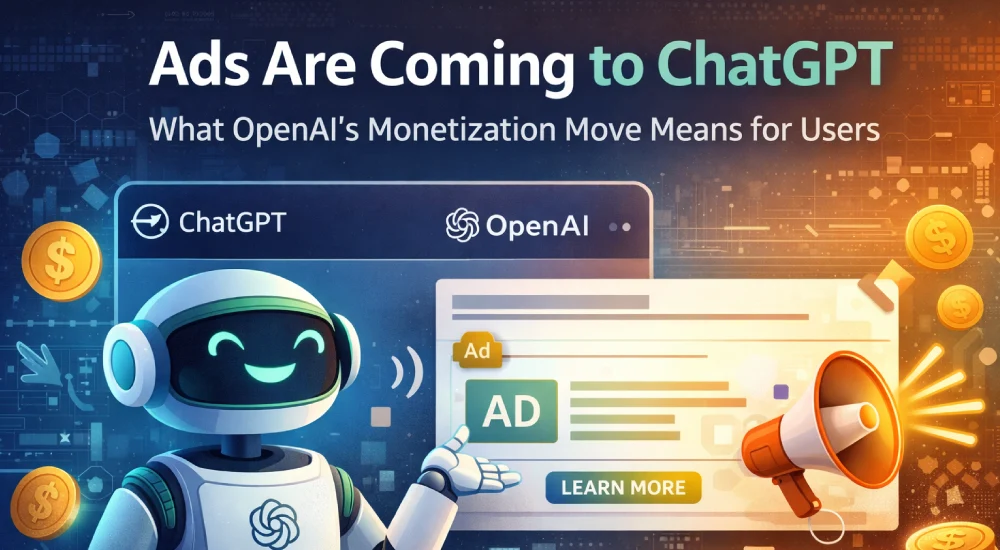
In a significant shift for one of the world’s most popular AI tools, OpenAI has announced that it will begin testing advertisements in ChatGPT – a move that marks a major evolution in the platform’s monetization strategy. This announcement has sparked conversation across the tech world, with implications for users, advertisers, and competitors alike.
Ads Are Coming, But Not Everywhere
According to recent reports, ads will start appearing in ChatGPT in the coming weeks, initially for users of the free tier and the newly expanded ChatGPT Go subscription plan. These ads will be clearly labeled and displayed separately from ChatGPT’s own responses, meaning they won’t alter or interfere with the generated answers users receive.
Importantly, premium subscribers on plans such as Plus, Pro, Business, and Enterprise are expected to remain ad-free, highlighting OpenAI’s attempt to balance monetization with user experience.
Why Is OpenAI Testing Ads Now?
OpenAI’s decision to introduce ads appears to be driven by economic pressures. The company has been investing heavily in AI infrastructure, from powerful data centers to expensive computing resources, as it expands the capabilities of its language models. These investments come with high costs, and ads offer a way to generate additional revenue without relying solely on subscription fees.
Rather than blending ads directly into conversation outputs, OpenAI has emphasized that advertising will be distinct and non-intrusive, saying that the chatbot’s responses will stay “helpful” and “objective” without advertiser influence. They also state that user conversations will not be sold to advertisers.
How Will Ads Work in ChatGPT?
The current plan is for ads to appear at the bottom of responses, or in clearly marked sponsored sections, often based on the content of the conversation. For example, if you ask about travel recommendations, an ad for a travel deal or hotel might appear below the answer.
OpenAI has also suggested that some ads could be interactive, allowing users to ask follow-up questions directly related to a product or service featured in the ad. This signals a new potential model where advertising is contextual and conversational, rather than static banners or pop-ups.
What This Means for Users and the Industry
For ordinary users, this change could bring both benefits and drawbacks. On the positive side:
- Free users may gain access to more advanced features at no cost thanks to the new revenue stream.
- Ads could be relevant and contextual, improving discovery.
At the same time, some users and critics worry that advertising may eventually erode the trust and simplicity that made ChatGPT popular in the first place, especially if ads begin to feel intrusive or too frequent.
Meanwhile, competitors such as Google have already stated they have no current plans to place ads in similar AI services like Gemini, at least for now, which could become a point of differentiation in the AI landscape.
Final Thoughts
OpenAI’s introduction of ads in ChatGPT marks a pivotal moment for AI tools transitioning from purely subscription-based models to hybrid monetization strategies. While the company is striving to maintain a balance between revenue and user experience, this development will certainly continue to spark debate across the industry.
What remains clear is that AI platforms are rapidly evolving, and the way we interact with them, both as users and as businesses, is changing too.